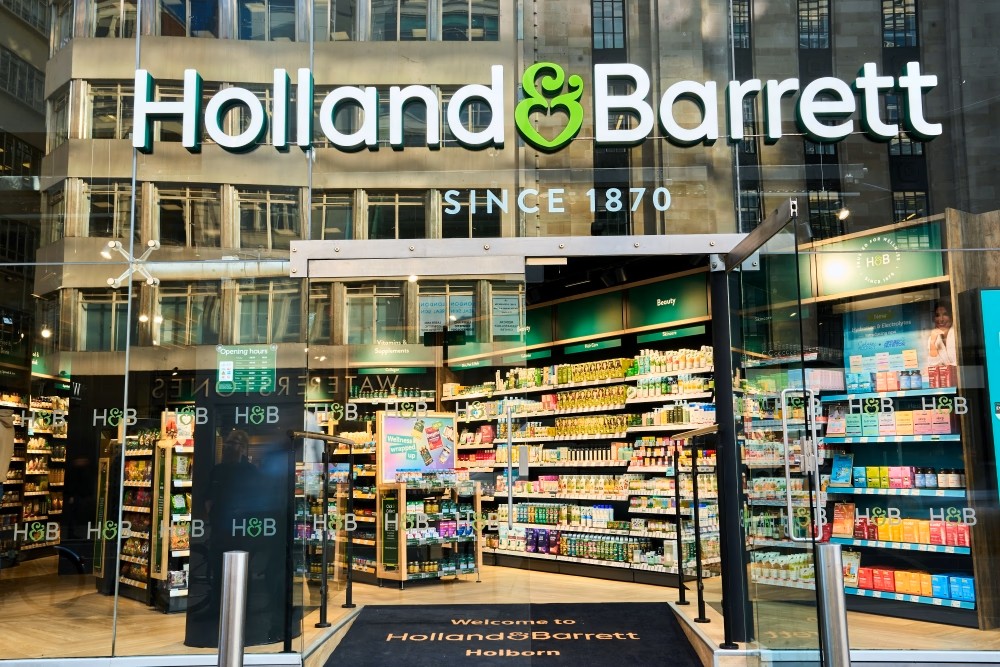
Holland & Barrett (H&B) are approaching this challenge differently. By using mobility data from Visitor Insights, they are building a clearer, more current picture of how locations perform, not just in theory, but in reality.
At a street level, this means understanding footfall in much more detail. Using the Street Footfall Heatmap, H&B can analyse activity across 40-metre street segments directly outside prospective stores. This allows them to see not only how busy a location is, but how footfall behaves over time, how consistent it is, when peaks occur, and how it compares across different locations.
What makes this approach particularly effective is how those insights are used.
Rather than assessing sites in isolation, prospective locations are benchmarked against street segments outside existing stores, where performance is already understood. By comparing footfall patterns and volumes, H&B can build a reliable proxy for how a new location is likely to perform.
This is then set in the context of the wider destination. Using cluster geofences, the performance of entire town centres, high streets or shopping destinations can be assessed, helping to understand the strength and consistency of the surrounding environment.
Together, this creates a more complete view, one that looks at both the individual pitch and the wider place.
The result is a more informed and repeatable approach to site selection. Decisions are grounded in evidence, risk is reduced, and opportunities that may previously have been overlooked become clearer.
For retailers operating in an increasingly competitive landscape, having that level of insight is no longer a nice to have: it’s becoming essential.